Health and Safety Policy for Landscaping Wandsworth
 This health and safety policy sets out the principles and standards that support safe, responsible, and professional landscaping services in Wandsworth. It applies to all site activities, including garden maintenance, planting, turf preparation, hedge care, fencing support, soft landscaping, and the handling of tools, machinery, and materials. Our aim is to protect workers, clients, visitors, and the public from avoidable harm while ensuring that every project is completed with care and consistency.
We believe that safe working practices are an essential part of quality landscaping work. This policy is based on identifying risks before work begins, putting suitable controls in place, and reviewing conditions throughout the job. Every task should be planned with attention to weather, terrain, access routes, wildlife, overhead hazards, and the movement of equipment. Safety is not treated as an extra step; it is part of the work itself.
All personnel involved in landscaping in Wandsworth are expected to act responsibly, follow instructions, and report hazards promptly. Supervisors must ensure that workers are competent for the tasks they carry out and that they understand the safe use of machinery, hand tools, lifting methods, and personal protective equipment. Good communication is vital, especially where multiple operatives are working in restricted areas or near the public.
 A clear risk assessment must be completed before each project or maintenance visit. This assessment should consider the layout of the site, the condition of the ground, the presence of sharp objects, unstable features, hidden services, and any risks created by pruning, digging, cutting, or lifting. Where necessary, work areas should be marked, isolated, or temporarily restricted to reduce the chance of injury. The aim is to make every stage of landscaping services as safe as reasonably possible.
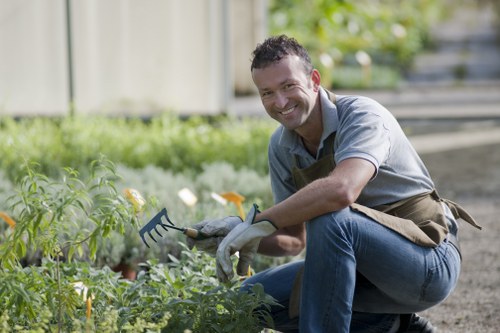
Equipment must be suitable for the task, correctly maintained, and checked before use. Damaged tools, faulty electrics, blunt blades, and leaking fuel systems must be removed from service until repaired. Workers should use the right protective equipment, including gloves, eye protection, safety footwear, hearing protection, and high-visibility clothing where appropriate. Personal protective equipment should be worn correctly and inspected regularly to confirm it remains effective.
 Manual handling is a significant consideration in landscaping projects. Soil bags, paving materials, plants, timber, and waste can all create strain if not moved carefully. Loads should be assessed before lifting, and mechanical aids should be used whenever practical. Team lifting may be necessary for awkward or heavy items. Training should emphasise posture, grip, route planning, and the importance of avoiding rushed movements.
Safe chemical use is another important part of this policy. Fertilisers, weed control products, fuel, oils, and cleaning agents must be stored securely and used only according to instructions. Containers should be labelled clearly, and spills must be dealt with immediately using suitable procedures. Landscaping teams should avoid unnecessary exposure by using controlled application methods, wearing suitable PPE, and keeping products away from children, pets, and food preparation areas.
Working outdoors brings changing weather conditions that can affect safety. Heat, cold, rain, wind, and poor visibility may all increase the likelihood of incidents. Work should be paused or adapted if conditions become unsafe. Hydration, sun protection, warm clothing, and slip-resistant footwear all contribute to safer performance. In colder periods, extra attention should be given to frost, mud, and reduced daylight. A flexible approach helps maintain safety in landscaping without compromising standards.
Housekeeping and site organisation also play a major role in preventing accidents. Tools should be stored properly, cables secured, waste removed promptly, and pathways kept as clear as possible. Trips, slips, and falls are more likely when work areas become cluttered or uneven. At the end of each shift, the site should be left in a tidy and secure condition. This helps protect anyone who remains on the premises after work has finished.
 Emergency procedures must be understood by everyone on site. Workers should know how to respond to injuries, near misses, fire, medical concerns, and accidental damage. First aid provisions should be available where required, and incidents should be reported and recorded without delay. In the event of serious harm or danger, work must stop immediately until the area has been made safe and a proper review has been completed.
Training and supervision are central to a strong health and safety policy. New workers should receive an induction that covers site rules, safe equipment use, emergency arrangements, and expected standards of conduct. Refresher training should be provided when tools, methods, or risks change. Supervisors should monitor performance regularly and correct unsafe behaviour quickly and consistently. Competence, awareness, and accountability are essential to safe working.
Contractors and subcontractors involved in garden landscaping must meet the same safety expectations as the main team. They should follow site rules, use approved methods, and cooperate with assessments and instructions. Where different trades are present, coordination is necessary to prevent clashes between tasks and reduce shared risks. Each party must take responsibility for the safety of its own activities while respecting the wider site environment.
 This policy will be reviewed regularly to make sure it remains effective and relevant to current operations. Updates may be needed after incidents, changes in equipment, new work methods, or changes in risk profile. Ongoing review helps ensure that landscaping work continues to meet high standards of care, reliability, and protection. By following these principles, landscaping activities can be carried out safely, professionally, and with respect for everyone involved.